My June 13 post, “Hate and Prejudice: A Different Face in the Mirror” (see directly below) was published yesterday as the lead letter in the Sunday, June 28 issue of The Virginian-Pilot. There were a few changes, but I’m pleased that the letter came through basically unchanged. One thing I did add was a reference to intolerance against dissenters, especially women, in the recent popular uprising in Iran concerning “irregularities” in the Presidential election.
One of my friends said he didn’t agree with my point of view because hatred and prejudice against those who are different from us is LEARNED. Parents teach their children to hate blacks, whites, gays, Muslims, you-name-it, and thus intolerance is acquired, rather than an innate part of human nature. I’m sad to say I disagree. Maybe prejudice is taught, but all too often it is taught easily, and people — adults as well as children in their formative years — usually don’t question or examine what they are taught. Regrettably, unquestioning acceptance of such teachings is a part of human nature too, and it will remain so until we learn to keep an open mind and think for ourselves.
Whatever the case, I continue to believe that hatred and prejudice, WHATEVER THE REASONS FOR THEIR EXISTENCE, are a continuing problem for our species, and we need to do everything we can to eliminate them. In short, let us strive to live and let live, and practice the Golden Rule as long as others will let us do so.
Lately, we have seen a flood of hate crimes. A white supremacist walks into the Holocaust museum and guns down a kind black guard. Another man, an anti-abortion fanatic, murders a doctor who provided women with abortions for unwanted, and sometimes life-threatening pregnancies. The list goes on and on. Internationally, in the media, and in our neighborhoods, hate and intolerance seem to spew forth from every corner, and there are numerous signs that it’s only getting worse.
Why? As a writer, university professor, and a teacher of young people, I write frequently about hatred and prejudice, trying to understand it. Despite humans’ ability to reach out and love others, there is a deep, irrational desire in many of us, to make everyone look just like the face we see in our own mirror. And not just the face, but the emotions and belief systems, the politics and religion and gender orientation behind the face as well. Whether we admit it or not, often we want everyone else to be just like us. To hell with diversity, which makes us uneasy and stirs us to rage, let’s all be identical, interchangeable parts in a cookie-cutter world.
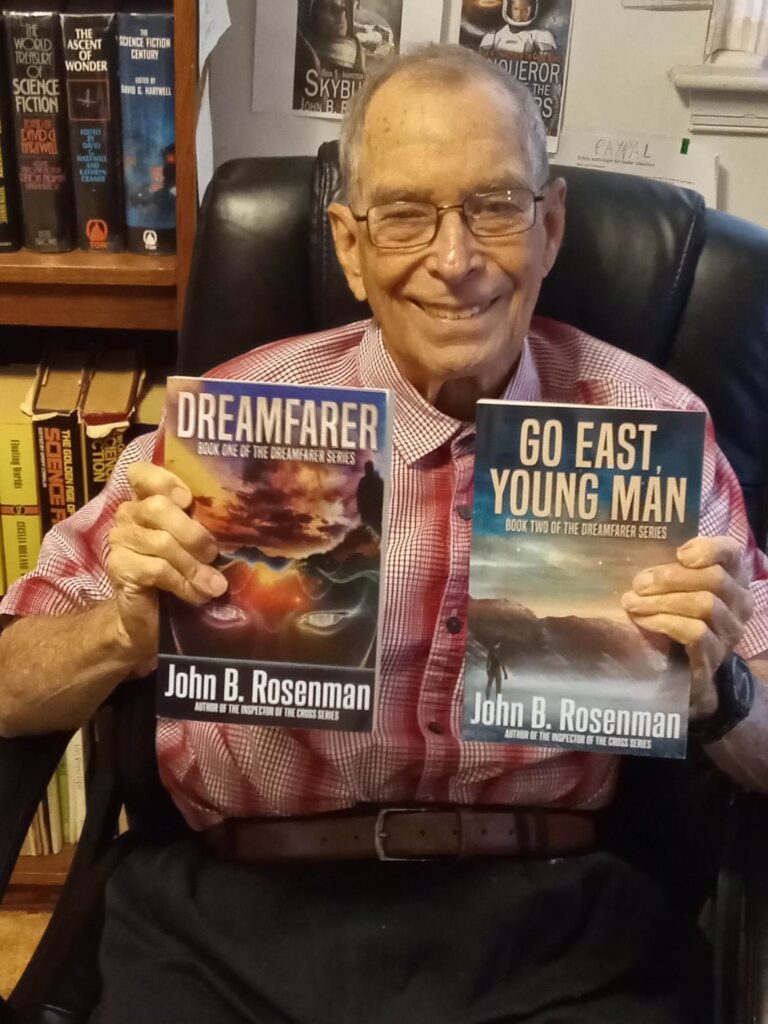
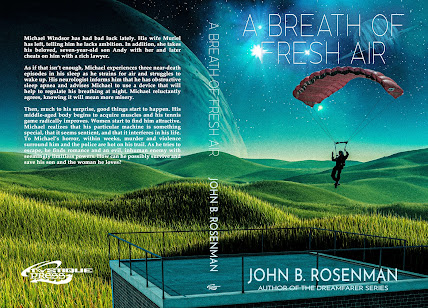
One of my recent novels, Beyond Those Distant Stars, explores an extreme manifestation of such hate in a science-fiction future. Published by Mundania Press (www.mundaniapress.com), it features a cyborg woman, part human/part machine, who alone can save humanity from alien invaders. Yet time and again, Stella is mocked, despised, and stupidly opposed simply because she is different—a difference, by the way, that she cannot help, just as all of us cannot help the color of our skins, our sexual preferences, or the beliefs we hold.
Here’s my belief: It’s time we looked beyond the face in the mirror and saw and accepted others. Black, White, Straight, Gay, Pro-Life, Pro-Choice, Midgets and Mystics and Muslims: All should be accepted as long as they accept us and don’t wish us harm in return. In the end, the Golden Rule is best, ignored and broken as it may be.
[I’d like to welcome Catherine Schaff-Stump at this stop on Drollerie Press’s blog tour. It’s good to have you, Catherine, and I hope you all enjoy her delightful story.]
The blue imp straddled one of the typed essays that covered the surface of my table like a crossword.
“What kind of teacher are you?” he said sarcastically. “Look at these comma splices!”
I pushed my glasses higher and peered at him over the tops of my bifocals. Imps from the nether regions are never noted for their politeness factor. “I’ve done the lecture on run-on sentences. Sometimes it works, sometimes it doesn’t.”
The imp shook his head like a man considering whether a car was really a lemon or a bargain. He studied a paragraph closely, his bulbous nose almost touching the Times Roman font. “I can see why you want out of this. What do they think? The apostrophe is extinct?”
My hand raked through my bangs and I scratched my forehead. My cat Bastet, front legs poking out the hole in front of the highest level of her green carpeted cat tower, condescended to study the doll-size humanoid. I guess older cats really aren’t as interested in small moving prey as kittens are. There was a time she would have pounced on the table, scattering pages and rolling pens.
“I was saying,” intoned the imp, that edge still in his voice, “are you sure that you don’t want us to write the novels for you? Instant fame, riches, pow! Really get something for your soul.”
I sighed. “We went over this. I like writing books. I want to write. What I need is someone to check all the papers. I’m tired of checking papers. I’ve been checking papers since nineteen-freaking-eight-six! They all sound the same. Significant event, senior prom. Most popular significant person is grandma. How many times can I read the same paper on Huck Finn?”
The imp recoiled at my bitter description of monotony, my slight tinge of hysteria. “Let’s lay this on the line.” He snapped his little imp fingers, and a large scroll floated in the air beside me, the paper waving magically in the air. Bastet’s ears perked at the flapping.
“You put your name on the dotted line, and you’ll never have to check an essay for your students again. No more red pens. In return, you have time to write your stories and novels. Have the life you want. Still get the money from your job. Best of all worlds. If you sign right here.”
That didn’t seem like a bad proposition to me. The tedium of checking student essays stretched forward in my life for twenty years at least, the paper-paved road that led English teachers to burnout and oblivion. I liked teaching, and the interaction with the students. I was tired of the written albatross, the stack of papers that pursued me everywhere.
I’d do it. My right eye spasmed. “Do I have to sign in blood?”
“That’s traditional,” said the imp, licking his lips. “But no, ink works fine.”
“I don’t know.” The contract waved in front of me, beckoning, seductive.
“No more little brackets or underlining,” tempted the imp. “No more questions like ‘clarity?’ or writing the angst-ridden ‘trite’ in the margins” No more grading sheet checklists.” He smiled smugly as a pen appeared in his arms. For him, it was as big as a lance. The nib could poke a hole in his chest. Ink like ichor beaded at its point.
“Every assignment returned by the next class, all the fun of writing novels, and your steady income.”
He offered up the pen, and I took it. The contract became still. I lowered the nib to the dotted line.
Bastet was a furry lightning streak as she launched from the tower. Her four paws knocked over the centerpiece vase and the ornamental chickens that added a homey touch. She pinioned the imp underneath her splayed paws.
The imp gurgled. Bastet scrabbled with her front paws and skittered the imp across the table. Papers tossed into the air. I dropped the pen, and black ink dripped across the essays before pen, contract, and ink disappeared, filling my nose with the smell of eggy sulfur.
The imp tried to steady himself with an arm. Bastet caught the arm between her pink-lined lips and flung the imp into the air, an action figure of luminous blue. The imp squealed more like a girl than an infernal entity. Another puff of brimstone removed him from my dining room.
Bastet blinked at me. She began grooming her black-and-white coat.
I shook my head to clear it. English teachers are particularly vulnerable to satanic overtures after about four hours of checking freshmen essays, I’d heard. Many of my fellow faculty members strung religious sigils around their office. I’d never listened.
I would never be careless again.
“Thank you,” I said. “Time management is a better way. I’ll just ease up on my paper return time, make some time to write. Yeah.” What a narrow escape!
I rubbed Bastet’s fur, and she arched her back. After a few moments of padding about the papers, she turned away from me.
In my head a voice echoed. Your soul is already mine.
I started to organize the papers back into piles. Yeah, right. There was no accounting for the egos of cats.